
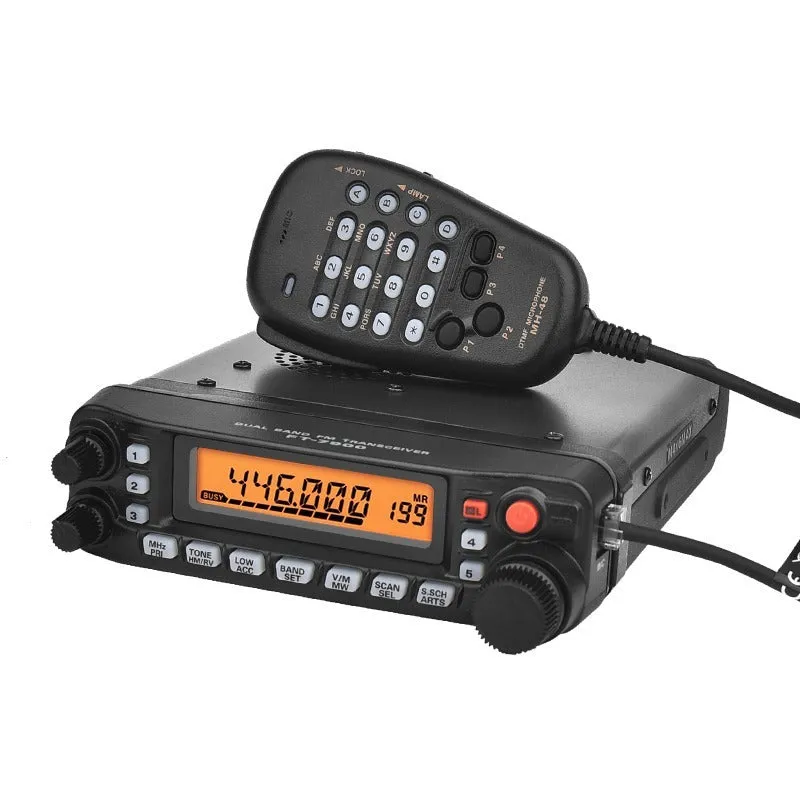
Car radio interphone for self-driving tours, high-power professional walkie-talkie with anti-interference function, complete machine with choice of standard antenna or 507 antenna options with universal and dedicated clamps


Car radio interphone for self-driving tours, high-power professional walkie-talkie with anti-interference function, complete machine with choice of standard antenna or 507 antenna options with universal and dedicated clamps
High-power car radio interphone with anti-interference for reliable self-driving tour communication

Maintaining clear communication between vehicles is a fundamental requirement for organised self-driving tours, group road trips, or professional convoy travel. Mobile phone coverage can be inconsistent or non-existent in remote areas, creating a safety and coordination gap. This high-power car radio interphone is designed as a practical solution for these scenarios, providing a dedicated communication channel. Supplied as a complete machine, it is available in several configurations featuring different antenna and clamp combinations, allowing you to select the setup that best matches your vehicle and touring needs. Its stated anti-interference function works to preserve audio clarity where other radio signals might cause disruption.
Features and Construction

The product is defined by its core function as a car-mounted communication device and the configurability of its antenna system. The base offering is a standard complete unit, with three upgraded options that include a 507 antenna paired with different cable and clamp types. This approach provides flexibility rather than a one-size-fits-all solution, acknowledging that vehicle designs and user preferences vary.
Material and Build
While specific materials for the main transceiver unit are not detailed, the antenna options provide insight into the build. The 507 antenna can be supplied with either a 3 feeder cable or a 1.5 Teflon cable. Teflon, or polytetrafluoroethylene (PTFE), is frequently used in high-quality coaxial cables for its excellent dielectric properties, temperature resistance, and durability, which is beneficial for a device exposed to the vehicle environment. The clamps are described as either 'universal', suggesting adaptability to different mounting points, or 'dedicated', indicating a design for a specific, secure fit.
Size and Practical Fit
No physical dimensions for the main unit or antenna are provided in the source material. The practical fit is instead determined by the choice of clamp. The universal clamp options are designed for versatile installation on various surfaces within the vehicle cabin, such as dashboard lips, air vent slats, or other protrusions. The dedicated clamp implies a more fixed mounting solution, potentially for a specific bracket or location, offering increased stability for rugged use. The selection between a 1.5 or 3 length feeder cable also affects the installation, allowing you to manage cable routing and reach the optimal antenna mounting position on your vehicle.
Uses and Placement

This interphone's primary stated use case is for self-driving tours, a context where multiple vehicles need to stay in contact over potentially long distances and varying terrain. Its utility extends to any scenario where a reliable, independent radio link between cars is valuable, outside the limitations of cellular networks.
Event or Professional Use
For organised touring companies, event support teams, or professional drivers in convoy, this device provides a controlled communication channel. The anti-interference function is particularly relevant in urban areas or near other radio sources where clear channels are scarce. Choosing a configuration with a dedicated clamp and a robust Teflon-cabled antenna would suit professional applications where the equipment is used frequently and needs to remain securely mounted. It enables lead vehicles to relay instructions, warn of hazards, or coordinate stops without relying on personal mobile phones.
Everyday Home Use
For private group travel, such as family holidays, camping trips with multiple vehicles, or off-road adventures with friends, this interphone enhances safety and convenience. It allows easy coordination for rest breaks, fuel stops, or navigation decisions. The standard configuration or one with a universal clamp offers a good balance for occasional use, being easy to install and remove. It solves the practical problem of losing sight of other vehicles in traffic or on complex routes, keeping the group connected.
Benefits and Buying Value
The value of this product lies in its purpose-built design for vehicle-to-vehicle communication and the ability to tailor the antenna system. It focuses on solving a specific problem with a dedicated tool, rather than adapting a general-purpose device.
Reuse and Low Maintenance
As a complete machine, it is designed for repeated use across multiple journeys. The choice of antenna cable material, like Teflon, suggests construction aimed at longevity and resistance to environmental factors inside and outside the vehicle. With no complex consumables mentioned (battery capacity is listed as 0, indicating perhaps a vehicle-power focus or unspecified internal battery), the ongoing maintenance is likely minimal, centred on secure mounting and general care of the unit and cables.
Why Choose This Product
This interphone is chosen for its direct applicability to the self-driving tour use case and its configurable components. The key decision point is selecting the right antenna and clamp combination for your specific vehicle and usage pattern. If you require a robust, semi-permanent installation, the dedicated clamp with a Teflon cable is a relevant choice. For flexible, occasional use, the standard or universal clamp options provide adaptability. The anti-interference function is a concrete feature aimed at improving performance in real-world conditions where other signals are present, contributing to more reliable communication.

