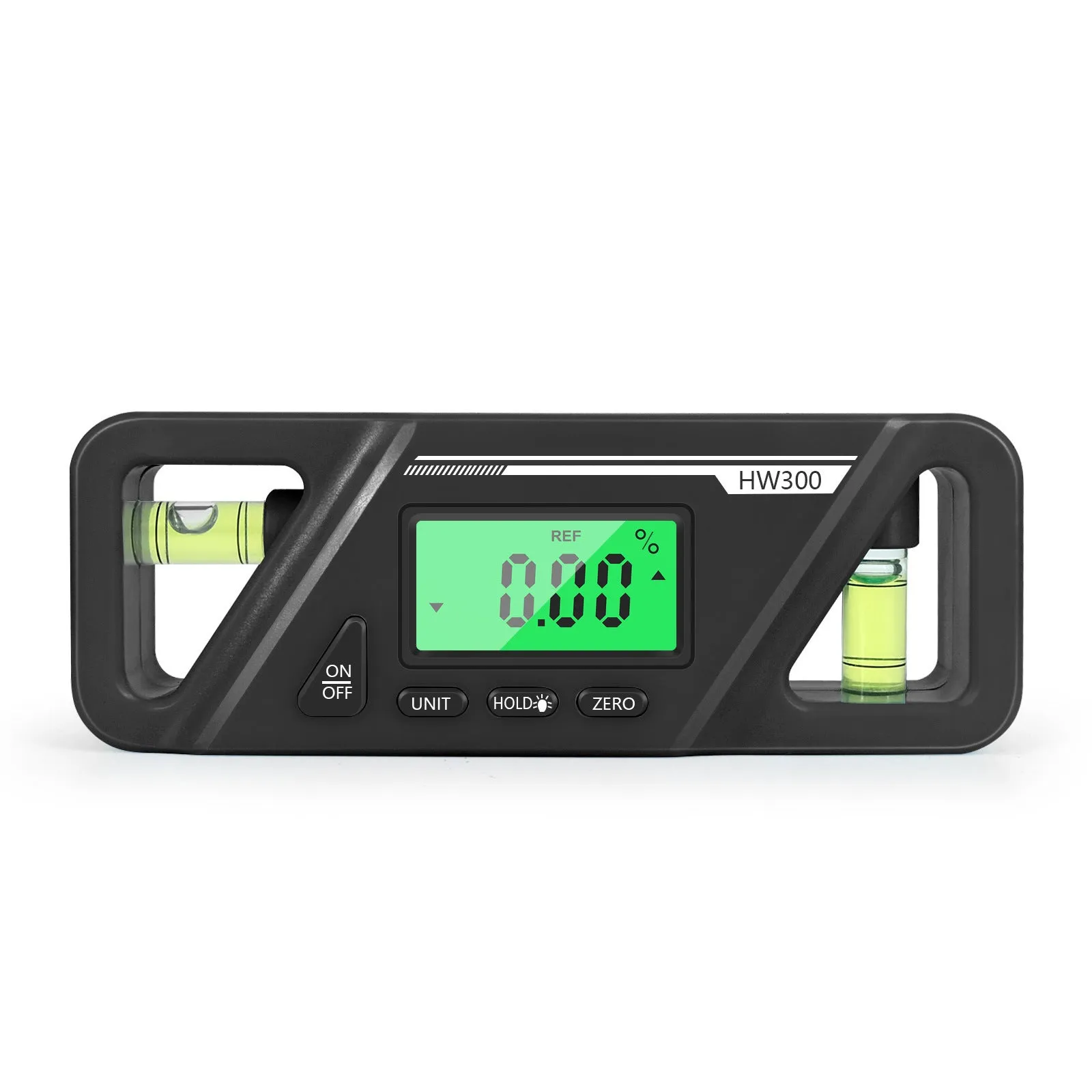
Digital inclinometer level meter with magnetic base, measuring range 4x90° 2x180° and 0.05° resolution, portable plastic ABS construction for protractor angle gauge and slope conversion tasks


Digital inclinometer level meter with magnetic base, measuring range 4x90° 2x180° and 0.05° resolution, portable plastic ABS construction for protractor angle gauge and slope conversion tasks
Magnetic Digital Inclinometer Level Meter for Precise Angle and Slope Measurement

Accurate angle measurement is fundamental in construction, machining, and woodworking. The HW300 series digital inclinometer level meter is a portable tool designed to deliver precise readings with practical features for professionals and enthusiasts. Its core function is to measure angles and slopes, with a digital display providing clear, high-resolution readouts. A key feature is its integrated magnetic base, which allows the device to attach securely to ferrous metal surfaces, enabling stable, hands-free operation. This combination of digital precision and practical mounting makes it a versatile instrument for tasks ranging from setting machinery angles to checking structural inclines.
Features and Construction
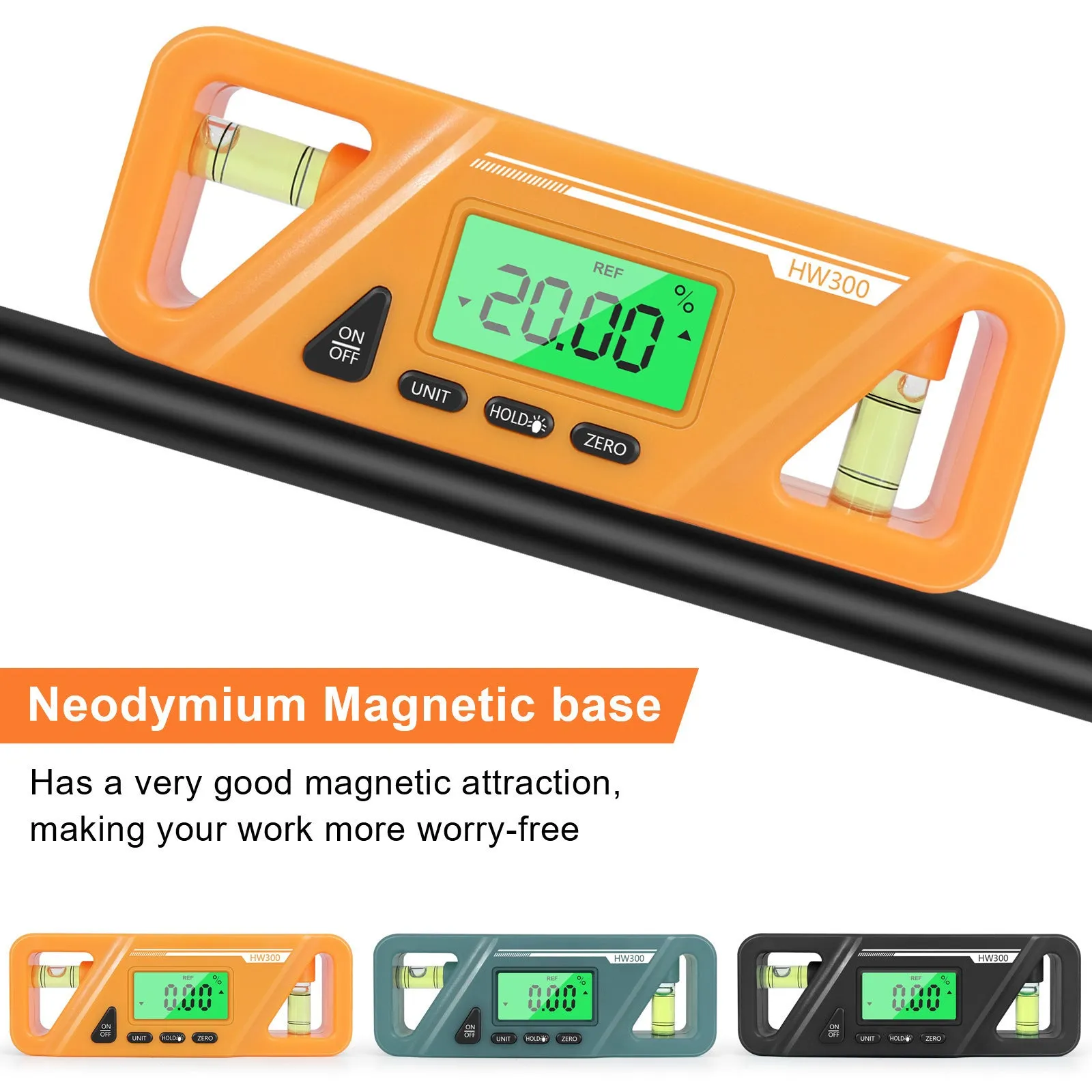
The inclinometer is built around a set of core functionalities and a practical physical design. It converts angular displacement into a digital readout, offering several measurement modes and a form factor suited for fieldwork.
Material and Build
The main housing of the device is constructed from plastic ABS, a material chosen for its balance of strength, light weight, and cost-effectiveness for handheld tools. This contributes to the device's net weight of just 56 grams (without battery), making it easy to carry and use for extended periods. The overall build is designed to be robust enough for workshop and site use while remaining portable.
Size and Practical Fit
With compact dimensions of 115mm in length, 42mm in width, and 22mm in depth, the inclinometer is designed for easy portability. This size allows it to be stored in a toolkit or pocket and facilitates its use alongside other measuring instruments, effectively expanding the user's measurement capabilities. The packaging size is slightly larger at 120x48x28mm, and the unit ships with a standard instruction manual.
Uses and Placement

The device’s specifications cater to both dedicated professional environments and precise DIY projects. Its operating parameters define its ideal use cases.
Event or Professional Use
In professional settings such as mechanical engineering workshops, construction sites, or fabrication shops, the magnetic adsorption feature is particularly valuable. It allows the meter to be fixed firmly to machinery, steel beams, or metal fixtures, providing a stable reference point for setting or verifying angles during assembly, alignment, or quality control checks. The specified operating temperature range of 0°C to 40°C covers most indoor and temperate outdoor working conditions.
Everyday Home Use
For home workshops, woodworking projects, or appliance installation, the inclinometer offers a precise alternative to traditional spirit levels or manual protractors. Functions like slope conversion are useful for tasks such as setting the correct pitch for a shed roof, aligning a satellite dish, or ensuring furniture is level on an uneven floor. The data lock function allows a single user to take a reading and then view it conveniently while making adjustments.
Benefits and Buying Value
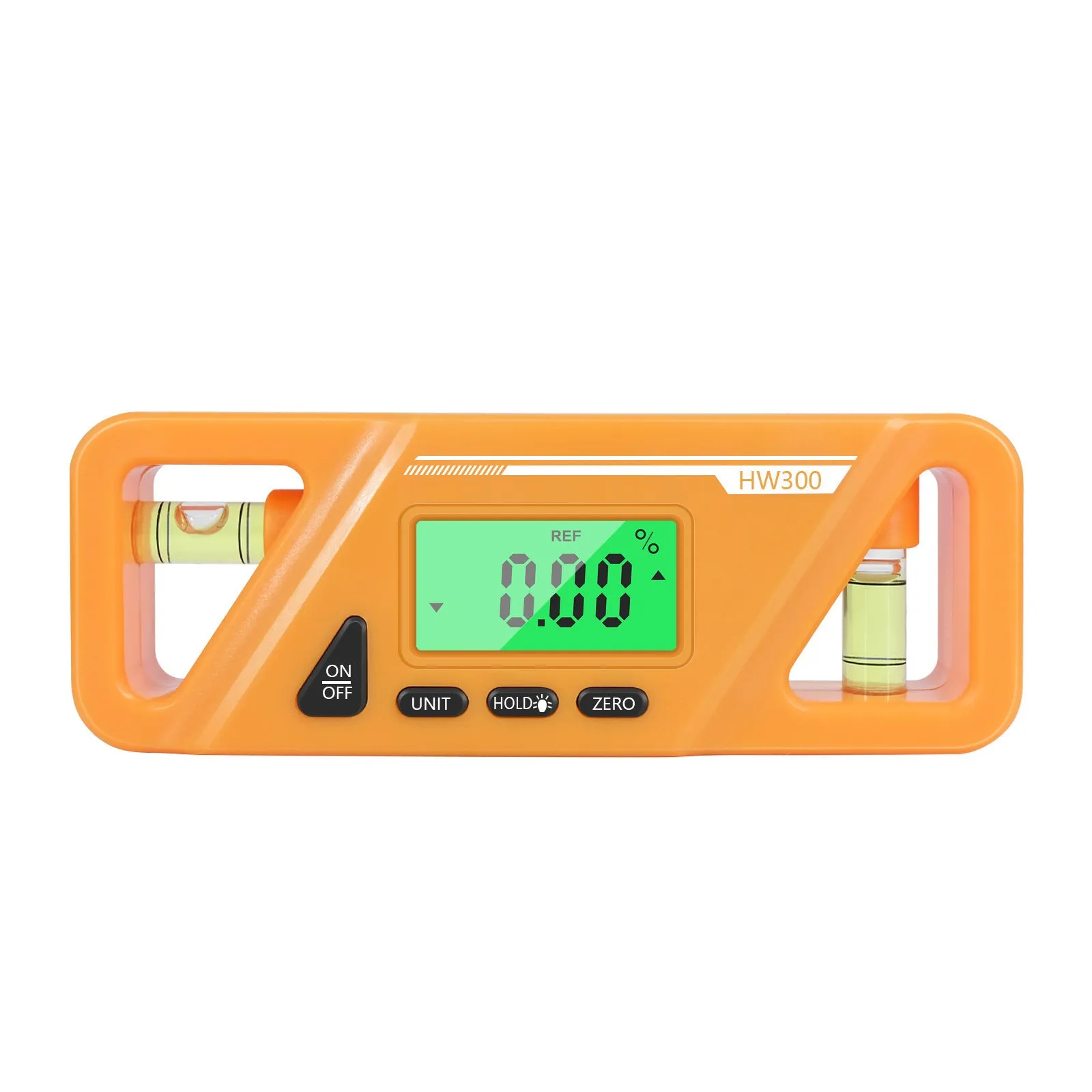
The value of this tool lies in the specific combination of accuracy, functionality, and convenience it provides, as outlined by its technical specifications.
Reuse and Low Maintenance
As a digital electronic tool, its maintenance is minimal, primarily involving battery replacement. The plastic ABS construction is resistant to many common chemicals and impacts typical in a workshop, supporting its reuse across multiple projects. Its durability is a function of its material and design for handheld measuring tool applications.
Why Choose This Product
This inclinometer stands out for its integrated magnetic base, which addresses the practical problem of holding a measuring device steady on metal surfaces. Its technical specifications, including a ±0.2° accuracy, 0.1° repeatability, and 0.05° resolution, provide a quantifiable level of precision for demanding tasks. The ability to switch between relative and absolute measurement modes, combined with angle and slope conversion, offers flexibility that a simple analogue level cannot match, making it a comprehensive tool for complex angular measurement.