

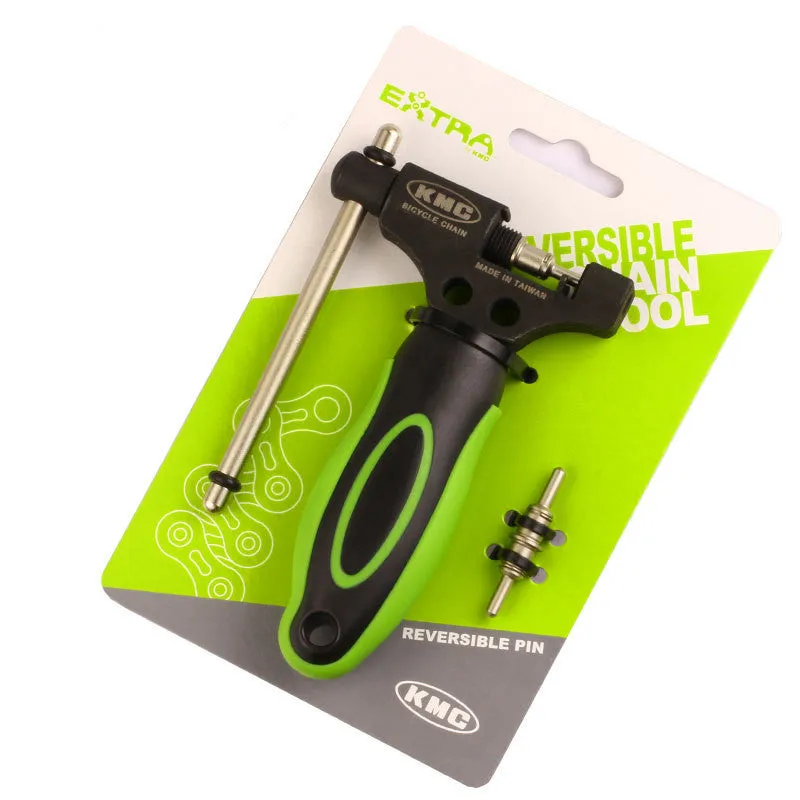
Bicycle chain tool with double shaft chaining device, made from steel construction, suitable for 0-speed and single-speed bike maintenance and repair work, supplied in green colour for easy identification in a toolkit


Bicycle chain tool with double shaft chaining device, made from steel construction, suitable for 0-speed and single-speed bike maintenance and repair work, supplied in green colour for easy identification in a toolkit
Steel bicycle chain tool with double shaft chaining device for 0-speed bike maintenance

This bicycle chain tool provides a practical solution for cyclists and home workshop users who need to maintain or repair 0-speed and single-speed bicycle chains. The core function centres on a double shaft chaining mechanism designed to install or remove chain links through direct mechanical action. Supplied in a distinctive green colour, the tool offers clear visual identification when stored among other maintenance equipment. The construction utilises steel materials, chosen for their ability to withstand the pushing and pulling forces required during chain pin extraction and insertion. This tool arrives as a complete unit, requiring no assembly before use, and focuses specifically on the single task of chain driving without additional functions or complexity.
Features and Construction

The bicycle chain tool incorporates several design elements that support its primary function. The green colour provides immediate visual recognition in a toolbox or workshop setting. The steel construction forms the basis of the tool's durability during the mechanical processes involved in chain maintenance.
Material and Build
The tool is manufactured from steel, which provides the necessary structural strength for the forces involved in chain pin work. This material choice ensures the device can withstand repeated use without deformation that might affect its operation. No additional materials or coatings are mentioned in the available specifications.
Size and Practical Fit
The source text does not provide specific dimensional measurements for this chain tool. Users should anticipate a handheld device sized appropriately for the mechanical operation of chain pin insertion and removal. The tool is designed for use with 0-speed and single-speed bicycle chains, indicating compatibility with standard chain dimensions for these bicycle types.
Uses and Placement

This chain tool serves specific applications in bicycle maintenance and repair contexts. Its design addresses common requirements for chain installation, removal, and repair work. The green colour aids in quick identification when needed for urgent repair situations.
Event or Professional Use
For professional bicycle mechanics or event support teams, this tool offers a dedicated device for chain maintenance tasks. The double shaft mechanism provides a direct method for working with chain links, potentially saving time during repairs. The steel construction supports repeated use in workshop environments where tools experience regular mechanical stress.
Everyday Home Use
Home cyclists and DIY enthusiasts will find this tool suitable for periodic chain maintenance. The straightforward design with a double shaft mechanism requires minimal technical knowledge to operate effectively. The green colour helps ensure the tool can be quickly located when needed for unexpected chain issues during home repairs.
Benefits and Buying Value
The bicycle chain tool provides several practical advantages for users needing to maintain bicycle chains. Its value lies in its focused functionality and durable construction rather than multiple features or accessories.
Reuse and Low Maintenance
The steel construction suggests potential for extended reuse across multiple chain repair sessions. The tool requires minimal maintenance beyond basic cleaning and dry storage to prevent surface corrosion. As a single-function device, it avoids complexity that might lead to mechanical failure or require specialist servicing.
Why Choose This Product
This chain tool offers a practical choice for users who specifically need a device for 0-speed and single-speed bicycle chain work. The double shaft mechanism provides a direct mechanical solution without electrical components or power requirements. The green colour provides functional benefits for workshop organisation and quick identification during repair tasks.
